


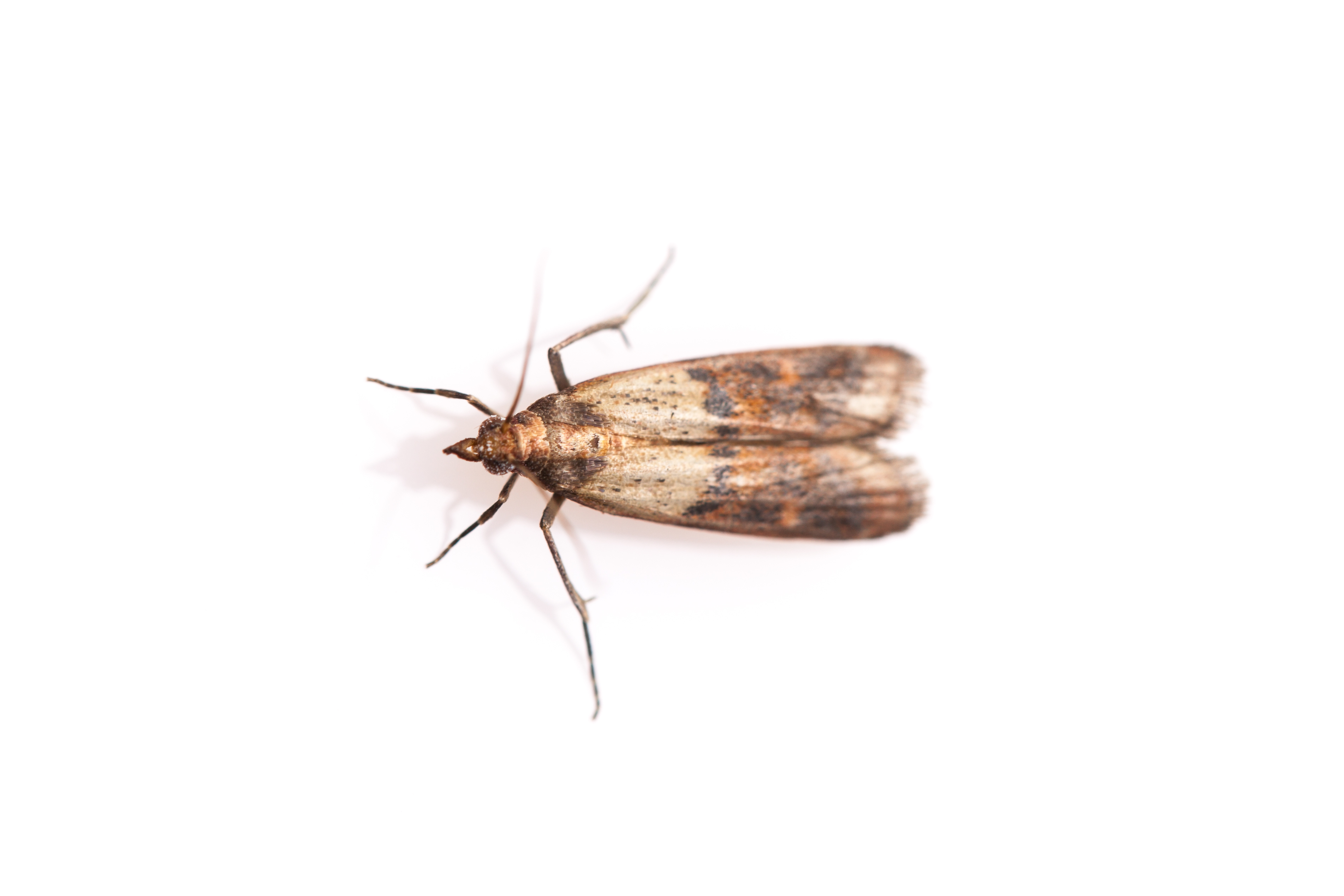
We might be welcoming the warmer weather but unfortunately, so are moths. As we head ever closer to the official start of summer, chances are that you’re going to start seeing a lot more clothes moths around the home.
Every year, around this time, moths start to look for a place to mate. Once successful, females can lay up to 50 eggs in just three weeks. These eggs hatch into larvae which live for a period of 50 days before they pupate.
Contrary to popular belief, it’s not the moths that nibble on your favourite clothes – it’s the larvae. Moths themselves actually pose no threat to your clothes. Larvae on the other hand will happily feed on wool, hair, leather, cotton, linen, silk and synthetic fibres.
With each female moth capable of laying up to 50 eggs which will remain larvae for 50 days – you can understand how significant damage can occur in a short space of time. Sadly, this is often the case as well because moths tend to hide away in dark, undisturbed areas which means that drawer you never open is a prime target.
From here, the larvae pupate. This means they wrap themselves in a silken case sealed with excrement and fibre. Don’t be fooled into thinking your clothes are safe while they’re pupating however. During this stage, the larvae drag themselves along, eating as they go.
Following this stage, the larvae become moths who will mate and carry on the cycle repeatedly. The time from an egg being laid until larvae become moths typically lasts between 65 and 90 days. Female adult moths then live for about 30 days and in this time can lay up to 300 eggs.
Moths are active from May until October so the one benefit of winter drawing closer is that you no longer have to worry about moth infestations.
Why do larvae eat clothes?
Considering most pests are lured in by the temptation of human or pet food, clothes seem an odd choice. The fibres found in our clothing do however prove very useful to larvae.
Hair and wool contain a protein called keratin which larvae can convert into useful nutrients. What’s more, they don’t drink water so are drawn to damp items of clothing or those which have sweat or liquid spills on them.
Because larvae leave their silken cases and faecal pallets behind, this in turn provides a new food source for the next batch.
How to prevent a moth infestation
- Check drawers and wardrobes regularly for signs of moths or larvae. Try to ventilate your wardrobe occasionally as well.
- Ensure clothes are fully dry before packing them away after you’ve washed them or been out in the rain.
- If you spill anything on your clothes, wash them even if you’ve managed to wipe up the spill.
- If you’re prone to sweating, it’s a good idea to wash your clothes after every wash.
- Hoover regularly because moths can also lay their eggs in carpet.
- When putting your summer/winter clothes away for storage, make sure they’ve been washed and dried. Store them in an air-tight bag or plastic container. Moths can chew through cardboard boxes, so they won’t offer any protection.
- Hang clothing made from natural fibres on cedar hangers as this will repel moths.
If you think you have a moth infestation, please contact Prokill and we’ll be able to book you in for a free pest control audit.
To find out more, head over to our moth pest control page. Alternatively, you can get in touch to book your free, no obligation pest audit, complete our online form or call us on 0800 328 9354.


Leave a Reply